In academic publishing, originality and ethical attribution are non-negotiable standards. Plagiarism remains one of the leading causes of immediate desk rejections, institutional investigations, and post-publication retractions across global journals.
Many researchers believe plagiarism only refers to literal copy-pasting. In reality, scientific plagiarism spans several forms—from inadequate paraphrasing and inaccurate source attribution to self-plagiarism.
This guide breaks down the forms of plagiarism, clarifies how journals interpret similarity scores, and outlines practical techniques to safeguard your manuscript.
1. What Constitutes Plagiarism in Academic Writing?
Academic plagiarism is the representation of another author's thoughts, experimental findings, methodology, figures, or exact words as your own original contribution without appropriate attribution.
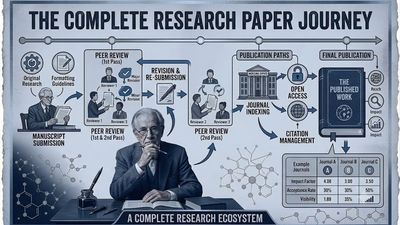
Scholarly publishers evaluate papers through automated screening databases (such as Crossref Similarity Check via iThenticate and Turnitin) before peer review begins. Plagiarism violates publication ethics codes established by the Committee on Publication Ethics (COPE) and can result in formal editorial sanctions.
2. The 5 Most Common Types of Plagiarism in Research
| Plagiarism Type | Mechanism | Real-World Example | Risk Level |
|---|---|---|---|
| Direct / Verbatim Plagiarism | Copying text word-for-word from a published source without quotation marks or citation. | Lifting two full paragraphs from a prior paper's introduction into your literature review. | Critical: Triggers instant desk rejection and potential blacklisting. |
| Mosaic / Patchwriting | Stitching together phrases from multiple papers, replacing occasional words with synonyms while keeping the original structure. | Swapping 3–4 words per sentence while retaining another author's unique conceptual framework. | High: Detected easily by modern semantic scanning tools. |
| Self-Plagiarism (Text Recycling) | Reusing extensive portions of your own previously published papers, conference proceedings, or theses without citation. | Copying experimental procedures or baseline literature from your 2023 paper into a 2026 submission. | Moderate to High: Potential copyright infringement if rights were transferred to the prior publisher. |
| Inaccurate / Misleading Attribution | Citing an inaccurate source, citing non-existent papers, or omitting primary sources for secondary summaries. | Citing a 2024 review paper for an equation formulated in 1985 without referencing the original discoverer. | Moderate: Harms scientific reproducibility. |
| Idea / Conceptual Plagiarism | Replicating another author's unique methodology, framework, or model architecture without giving credit, even if rephrased completely. | Applying an identical novel algorithmic workflow while describing it in entirely new phrasing without citation. | Critical: Considered serious scientific misconduct under COPE norms. |
3. Demystifying the "Acceptable" Similarity Index
Authors often ask: “What is the safe similarity percentage to avoid rejection?”
There is no single global magic number, because similarity is not identical to plagiarism. A report from Turnitin or iThenticate flags overlapping words, not scientific intent.
General Journal Threshold Benchmarks
- Under 15% Overall Similarity: Generally considered acceptable by most multidisciplinary journals, provided there are no dense blocks of unquoted copied text.
- 15% to 25% Overall Similarity: Requires human editorial review. Editors inspect whether matches are standard laboratory protocols, boilerplate legal phrases, or unoriginal analysis.
- Above 25% Overall Similarity: High risk of immediate desk rejection or being returned for extensive rewriting prior to reviewer assignment.
The Single-Source Rule
A paper with a low overall score (e.g., 12%) can still face rejection if 8% comes from a single external paper. Most reputable journals require that no single source exceeds 1% to 2% overlap with your manuscript.
Sections Where Overlap Commonly Appears
- Methods Section: Often shows moderate overlap because standard testing protocols (e.g., standard reagents, common Python libraries, standard statistical formulas) cannot easily be reworded.
- Literature Review & Discussion: Should show near-zero continuous overlap. These sections must demonstrate your independent intellectual synthesis.
- References & Bibliography: Standard journal screening tools are configured to exclude the reference list and matched quotes automatically.
4. Practical Strategies to Prevent Plagiarism
Adopting structured research habits minimizes accidental overlap during drafting:
-
Paraphrase from Memory, Not from the Screen:
Read the source study, close the document, reflect on the core takeaway, and write the concept in your own voice. Open the source again only to verify statistical values or technical claims. -
Attribute Original Sources Immediately:
Do not insert placeholder text like(citation needed)intending to locate the paper later. Use reference software (such as Zotero, Mendeley, or EndNote) to drop accurate citations into your text in real time. -
Use Quotation Marks for Exact Verbatim Phrasing:
If you must present a definition or policy excerpt in its precise original words, enclose the statement in quotation marks alongside the author, year, and page number. In scientific disciplines, direct quotes should be used sparingly. -
Transparently Disclose Previous Work:
If your paper expands upon your prior conference abstract or master's thesis, state this clearly in your methodology or acknowledgments:"This study extends preliminary empirical findings initially presented at [Conference Name, Year] with expanded longitudinal datasets."
-
Run a Pre-Submission Similarity Audit:
Before submitting to a journal, test your draft using institutional similarity software to identify accidental patchwriting or unreferenced claims.
Summary
Preserving academic originality is essential for building a lasting scientific reputation. Journal editors and reviewers rely on similarity reports as diagnostic tools, but human scrutiny determines ethical integrity. By learning to synthesize literature objectively, acknowledging source contributions, and keeping single-source overlaps low, you position your manuscript for a smooth review cycle.
Related Perspectives in Education & Library Sciences