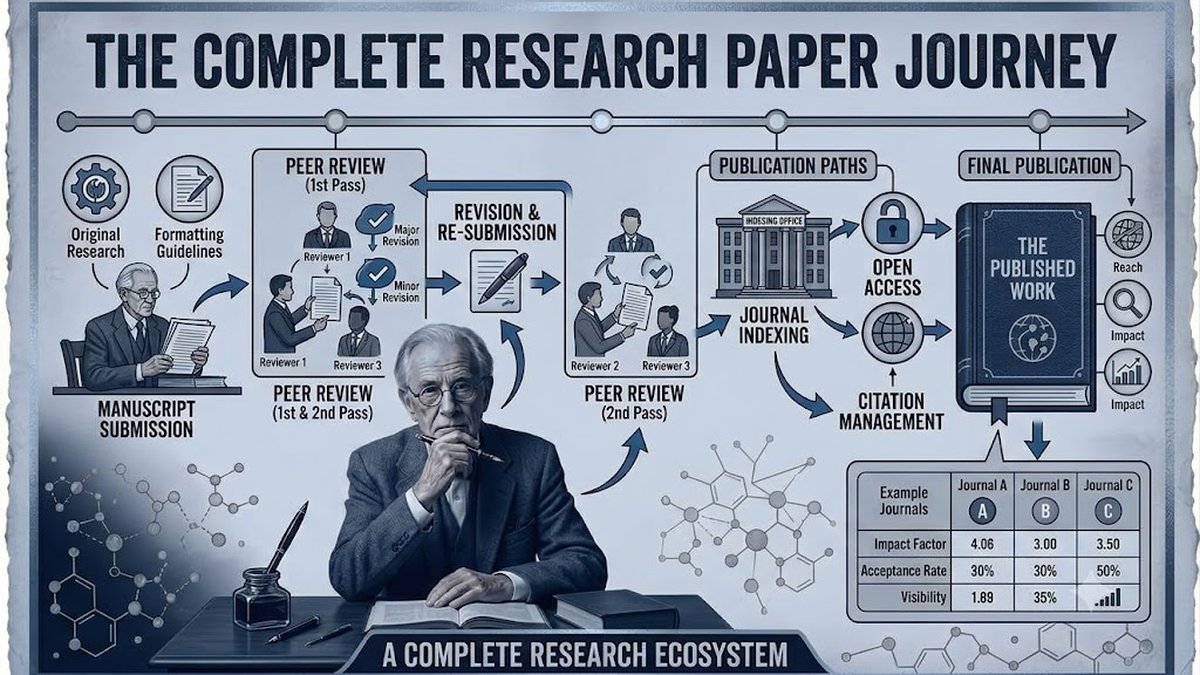
For many researchers, clicking the "Submit Manuscript" button marks the end of a long, exhausting journey of experimentation, data analysis, and writing. However, in the academic publishing lifecycle, submission is actually just the starting line.
Understanding what happens behind the scenes after your paper leaves your hands can help you navigate editorial expectations, prevent frustrating delays, and prepare for the rigorous stages that lead to final publication.
Phase 1: Pre-Submission Preparation & Selection
Before a manuscript ever enters a journal's system, the foundational groundwork determines its initial success:
- Target Journal Selection: Aligning your study with a journal's official Aims & Scope prevents immediate desk rejections.
- Author Formatting: Strict adherence to the journal's guidelines regarding word counts, reference styles (APA, IEEE, Harvard), and structured abstracts signals professionalism.
- Ethical Compliance: Ensuring your study meets institutional review board (IRB) standards and checking similarity indexes via plagiarism screening software.
Phase 2: Submission and Desk Screening (Triage)
Once you upload your manuscript, cover letter, and supporting files to the editorial portal, the paper enters its first major test:
- Administrative Check: The editorial office verifies that all mandatory files (such as conflict-of-interest disclosures and data availability statements) are included.
- Editor-in-Chief Triage: The handling editor reviews the manuscript to assess basic academic rigor, language quality, and direct scope alignment.
- The Desk Decision:
- If out-of-scope or flawed: The paper receives an immediate Desk Rejection (typically within 48 to 72 hours), saving weeks of waiting.
- If approved: The manuscript is assigned to an Associate Editor.
Phase 3: The Peer Review Gauntlet
If your paper passes desk triage, it moves to formal external evaluation—the core quality filter of scholarly publishing:
- Reviewer Matching: The editor assigns 2 to 3 independent domain experts with verifiable research credentials in your specific subfield.
- Double-Blind Evaluation: Reviewers critically examine your methodology, sample validity, statistical models, and whether your conclusions are fully supported by your data.
- The Editorial Verdict: Based on referee reports, the handling editor issues one of four verdicts: Accept as is, Minor Revisions, Major Revisions, or Reject.
Phase 4: Revisions and Rebuttal
Receiving a "Revise and Resubmit" decision is a positive milestone indicating the journal wants to publish your work.
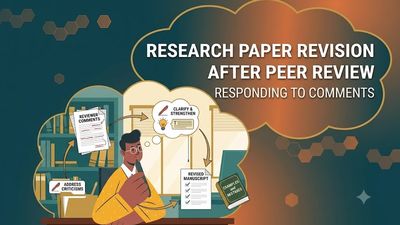
- Itemized Response Matrix: Authors must address every single reviewer critique point-by-point in a structured rebuttal table, noting exact page and line numbers in the revised text.
- Resubmission: Uploading both a clean version and a tracked-changes manuscript for final editorial verification.
Phase 5: Production, DOI Assignment, and Publication
Once the editor is satisfied with your revisions, the manuscript transitions from the editorial queue to production:
- Copyediting & Proofing: Professional editors check formatting, grammar, and alignment with journal style sheets. Authors receive final proofs to check for stray typos.
- Persistent Identifier (DOI): A unique Digital Object Identifier (DOI) and XML metadata are generated, ensuring permanent web archiving and global citation tracking.
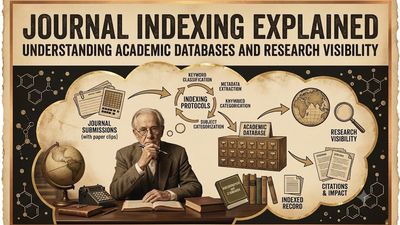
- Online Release: The article is published open-access or assigned to an active volume/issue, syndicate-indexed across major academic search engines.
Summary
The research paper publishing process is an intricate, collaborative system designed to validate and refine scientific discovery. By understanding each phase—from desk triage and peer review to final production—you can approach journal submission with confidence, clarity, and professionalism.
Related Perspectives in Education & Library Sciences