
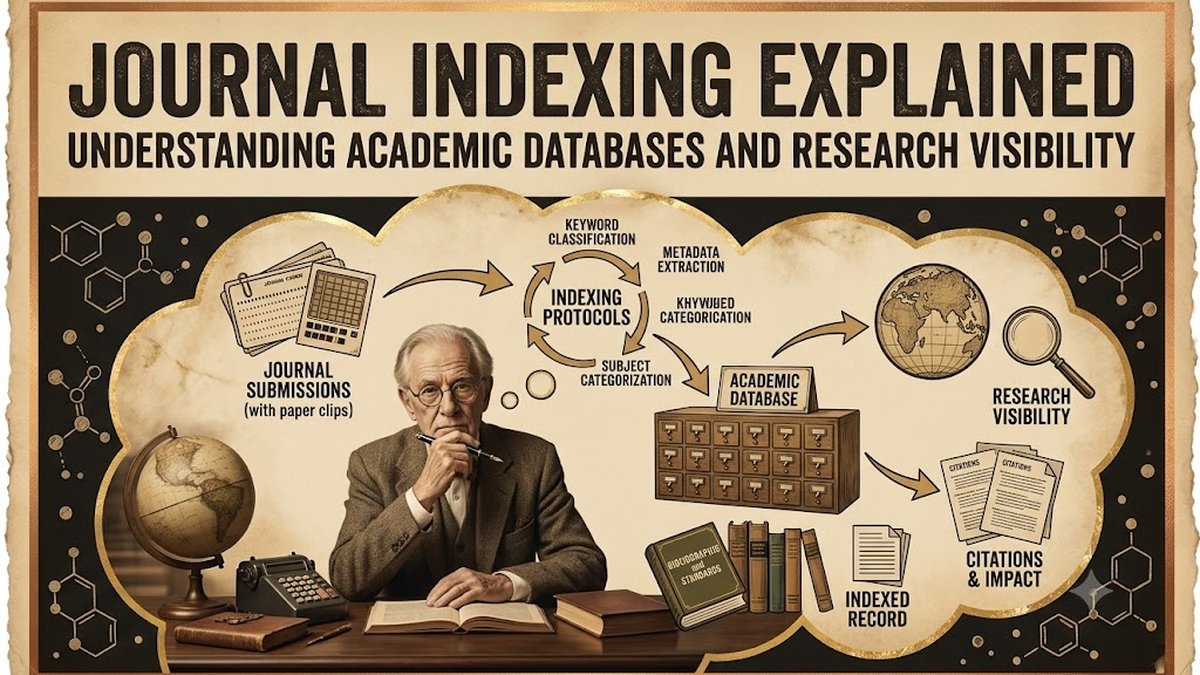
When a researcher finishes writing a manuscript, selecting where to publish goes beyond checking formatting styles and review speeds. One of the most vital criteria to evaluate is journal indexing.
Without proper indexing, even groundbreaking research can remain buried in unlinked archives, missing out on the global readership, citations, and academic influence it deserves. Understanding how databases work helps scholars protect their publishing investments.
1. What Is Journal Indexing and Why Does It Matter?
An index is a curated, searchable bibliographic database that catalogs scholarly literature. When a journal is indexed, its published articles—along with titles, abstracts, author affiliations, and bibliographies—are systematically ingested into these massive digital repositories.
- Discoverability: Indexes allow researchers worldwide to locate your specific study using targeted keyword queries rather than browsing individual journal websites.
- Quality Vetting: Reputable databases enforce strict editorial, ethical, and technical standards before accepting a journal, serving as a baseline shield against predatory publishers.
- Career Advancement: Academic promotion committees, university boards, and funding agencies frequently evaluate applicants based on whether their papers are hosted in recognized bibliographic indexes.
2. The Core Architecture of Scholarly Databases
Not all databases serve the same function. Scholarly repositories generally fall into three structural categories:
| Database Tier | Primary Function | Typical Inclusions |
|---|---|---|
| Comprehensive Academic Search Engines | Broad-scale automated crawling that indexes web-wide scholarly documents. | Preprints, conference papers, institutional repositories, and journal articles. |
| Specialized Bibliographic Indexes | Domain-specific curation focusing intensely on life sciences, engineering, law, or humanities. | Peer-reviewed journal papers filtered by rigorous subject-matter criteria. |
| Citation Network Trackers | Mapping interconnected research by tracking who cited whom over decades. | Verified journal articles paired with complete reference tree metadata. |
3. Key Benefits of Publishing in Indexed Journals
Choosing journals backed by robust database preservation secures several long-term advantages:
- Permanent Digital Archiving: Indexed papers are protected against sudden website shutdowns or broken URLs through redundant data preservation networks.
- Accurate Citation Tracking: Structured metadata ensures that every time a peer cites your paper, the interaction is accurately recorded and credited to your researcher profile.
- Global Academic Reach: Indexing syndicates your work across institutional library portals, making it accessible to university researchers across continents.
4. What Researchers Should Check Before Submitting
To avoid predatory traps and ensure your manuscript receives proper exposure, verify these indexing checkpoints on prospective journal websites:
- Inspect the Archive Links: Do not take a journal's word for it. Click through to the stated database archives and search for the journal's recent volume issues to verify active inclusion.
- Evaluate ISSN Verification: Ensure the journal maintains a registered International Standard Serial Number (ISSN) linked cleanly with international registry centers.
- Review Metadata Standards: Professional journals use standardized protocols (such as Crossref DOIs and XML tagging) to ensure seamless communication with indexing crawlers.
Summary
Journal indexing transforms a solitary published paper into an active, globally accessible contribution to science. By prioritizing journals that maintain transparent indexing practices and robust digital archiving, you protect your academic integrity and maximize the long-term impact of your research.
Related Perspectives in Education & Library Sciences