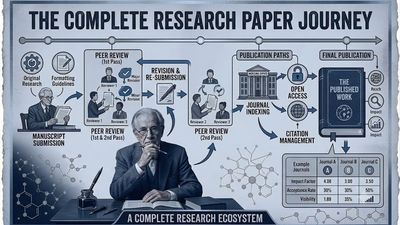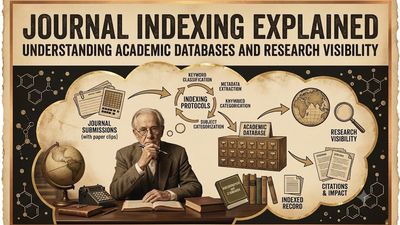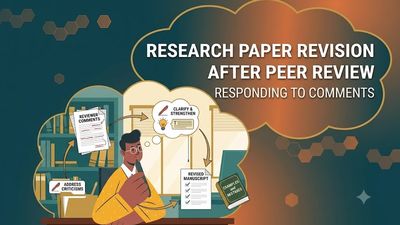

Writing a publishable research paper is often perceived as a daunting hurdle for university students and early-career researchers. Beyond presenting original data or theoretical analysis, scholarly publishing requires adhering to strict structural conventions, academic rigor, and objective communication.
Whether preparing a thesis-driven paper, an empirical investigation, or an interdisciplinary inquiry, this comprehensive guide outlines every stage of the writing journey—from conceptualization to final submission.
1. Conceptualization: Narrowing Your Research Question
Strong papers begin with focused inquiries. Avoid broad topics that lead to superficial summaries; instead, formulate a precise, researchable question using the FINER criteria:
- Feasible: Can you answer it within your time, resource, and data constraints?
- Interesting: Does it spark scholarly curiosity and offer practical relevance?
- Novel: Does it address an identified knowledge gap or offer fresh perspectives?
- Ethical: Does the research comply with institutional and international ethics standards?
- Relevant: Will the findings advance the academic discipline or industry practice?
Actionable Tip: Formulate a working thesis statement early. It serves as your manuscript’s compass, ensuring every subsequent section directly defends or tests your central proposition.
2. Systematic Literature Review & Citation Management
A rigorous literature review establishes context, demonstrates scholarly awareness, and highlights the precise gap your paper addresses.
- Use Academic Indexes: Rely on curated repositories like Google Scholar, Scopus, Web of Science, and open-access portals to retrieve peer-reviewed studies.
- Organize Systematically: Use reference managers (such as Zotero, Mendeley, or EndNote) from day one to store DOIs, track PDFs, and generate accurate citations.
- Synthesize, Don't Just Summarize: Group prior findings thematically rather than author by author. Compare conflicting methodologies and highlight unaddressed questions.
3. The IMRaD Architecture: Structuring Your Manuscript
Most modern empirical and multidisciplinary journals adopt the standardized IMRaD format (Introduction, Methods, Results, and Discussion).
| IMRaD Section | Core Question Answered | Key Inclusions |
|---|---|---|
| Introduction | Why did you start? | Context, literature synthesis, identified knowledge gap, explicit study aims. |
| Methods | What did you do and how? | Research design, dataset/sample size, experimental setup, statistical formulas. |
| Results | What did you find? | Factual data outputs, high-contrast figures, primary metrics without interpretation. |
| Discussion | What does it mean? | Hypothesis evaluation, comparison with benchmark literature, limitations, future scope. |
A. Introduction: The Hook and the Gap
- The Big Picture: Introduce the problem domain and its broader significance.
- The Status Quo: Summarize established knowledge and cite foundational studies.
- The Missing Link: State clearly what remains unknown or contentious.
- The Contribution: Conclude the section with your specific objectives and research hypothesis.
B. Materials and Methods: Blueprint for Reproducibility
Reviewers evaluate methodology to ensure reliability. Provide sufficient detail so that an independent researcher can replicate your study:
- Study Design & Setting: Empirical setups, theoretical frameworks, or experimental controls.
- Data Collection: Sample size, recruitment criteria, hardware/software specifications, and survey instruments.
- Analytical Procedures: Statistical models, software packages (including exact version numbers), and significance thresholds ($p$-values, confidence intervals).
C. Results: Objective Reporting
Present your findings neutrally without interpretive bias:
- Highlight primary discoveries first, followed by secondary correlations.
- Integrate high-contrast tables and figures with descriptive captions.
- Avoid duplicating data: if a table contains exact metrics, describe only the overall trends and anomalies in the text.
D. Discussion: Interpretation and Significance
Bridge your results back to your initial research question:
- Interpret Findings: Do the results support or contradict your primary hypothesis?
- Compare with Literature: How do your metrics align with previous studies cited in your introduction?
- Acknowledge Limitations: Candidly disclose constraints (e.g., sample size boundaries, computational limits) and propose directions for future inquiry.
4. Manuscript Component Checklist
Before submitting to an editorial board, cross-reference your draft against this core component checklist:
| Manuscript Element | Core Purpose | Common Pitfalls to Avoid |
|---|---|---|
| Title | Precise, searchable identifier summarizing key variables | Overly poetic phrasing; unnecessary jargon |
| Abstract | 200–250 word standalone summary (Background, Method, Findings, Conclusion) | Vague conclusions; citations inside abstract |
| Keywords | 4–6 indexed terms for discovery and SEO | Repeating words already in the main title |
| Data Availability | Statement on public repository access (Zenodo, Figshare, Dryad) | Omitting data-sharing disclosures |
| Conflict of Interest | Transparency regarding financial or institutional support | Failing to disclose funding grants |
5. Ethical Writing, Citations, and AI Guidelines
Upholding scholarly integrity protects your academic standing and accelerates peer review:
- Plagiarism and Attribution: Ensure every external idea, dataset, or direct quotation is explicitly cited. Paraphrasing must reflect original synthesis rather than simple word replacement.
- Generative AI Usage: If AI tools assisted in code generation, grammar refinement, or literature exploratory mapping, disclose this transparently in your acknowledgments or methodology according to journal policies.
- Authorship Criteria (CRediT): List contributors who provided substantial input into design, analysis, or manuscript preparation.
6. Final Polish: The Pre-Submission Review
A polished paper signals professionalism to editors and reduces desk-rejection rates:
- Adhere Strictly to Author Guidelines: Verify word limits, heading hierarchy, and citation formats (APA, IEEE, Vancouver, Harvard).
- Conduct a Blind Read-Through: Check for transition flow between paragraphs, eliminate passive voice clutter, and ensure technical abbreviations are defined at first mention.
- Prepare a Professional Cover Letter: Introduce your submission, explain its relevance to the journal’s audience, and state that the manuscript has not been submitted elsewhere concurrently.
Summary
Writing an exceptional research paper is an iterative craft combining scientific discipline with clear academic storytelling. By formulating a targeted research question, maintaining methodological transparency, and organizing your insights through structured frameworks, you maximize your paper’s scholarly reach and long-term citation impact.
Related Perspectives in Education & Library Sciences