For academic researchers and scholars, the journey of a research paper does not end at publication. In the modern scholarly landscape, citation count serves as a primary metric of academic influence, research reach, and career advancement.
However, even groundbreaking scientific findings can remain obscure if they are not actively discoverable. Relying solely on passive indexing is rarely enough. Researchers must employ ethical, proactive strategies to maximize the visibility and readership of their work.
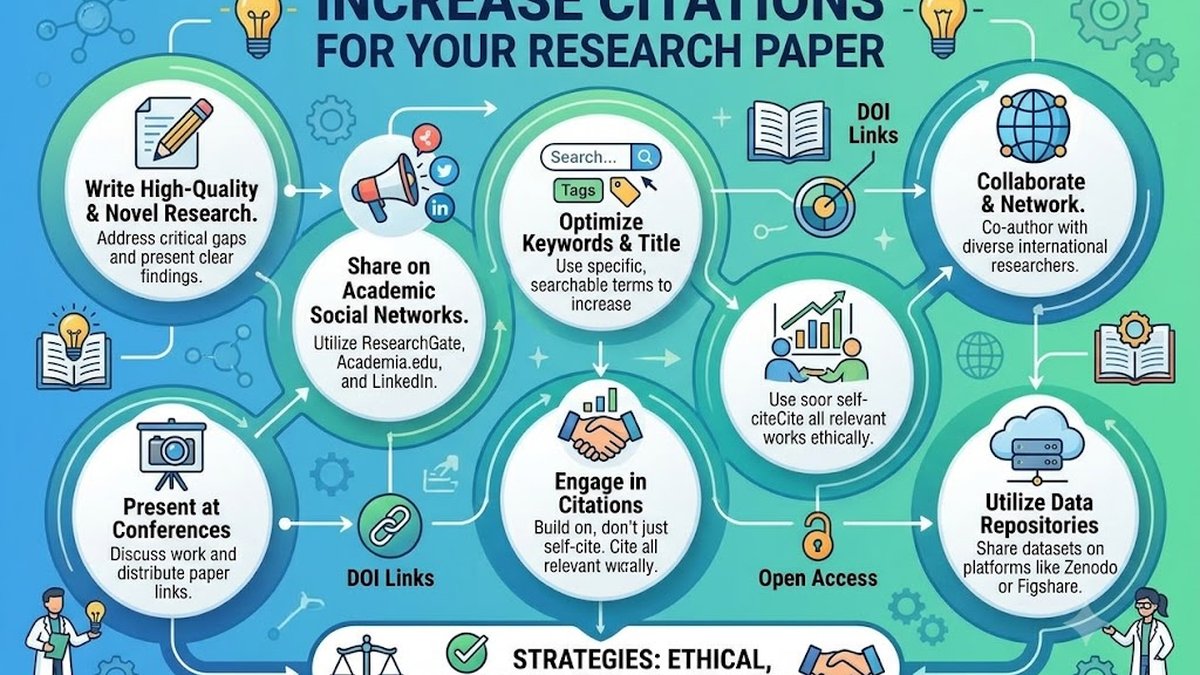
1. Optimize Your Title and Abstract for Academic SEO
Just as commercial websites rely on search engine optimization (SEO), academic databases (such as Google Scholar, Scopus, and PubMed) rely on keyword indexing to match articles with inquiring researchers.
- Front-Load Core Keywords: Place your primary research variables, methodologies, or niche domains directly within the first 10 words of your title. Avoid vague or poetic titles.
- Draft a Search-Friendly Abstract: Ensure your abstract includes 4 to 6 descriptive topical terms that peers are likely to type into search bars.
- Avoid Acronyms in Titles: Unless universally recognized (like DNA or AI), spell out terms fully so keyword algorithms capture them accurately.
2. Choose the Right Journal and Access Model
Your choice of publication venue dictates your initial readership velocity:
- Target Open Access (OA) Venues: Studies consistently show that papers published under Gold Open Access models receive higher download frequencies and earlier citations compared to paywalled articles, because researchers worldwide can access them instantly without institutional subscriptions.
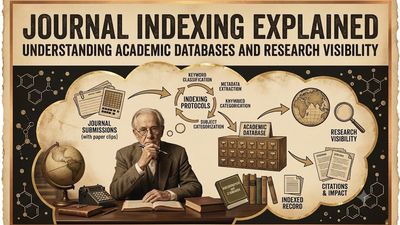
- Verify Rigorous Indexing: Ensure candidate journals are indexed in prominent databases like Scopus, Web of Science, DOAJ, and Google Scholar. Unindexed journals severely bottleneck long-term citation growth.
3. Build and Maintain Your Academic Digital Footprint
Active researcher profiles act as centralized hubs that aggregate your publications and automatically track your growing citation metrics.
- Google Scholar Profile: Claim your profile, verify your institutional email, and ensure all your published articles are correctly linked. Scholars frequently search via author profiles.
- ORCID iD: Always attach your unique ORCID identifier during manuscript submission. This prevents name-ambiguity issues (crucial for common surnames) and automatically syncs your publications across global databases.
- ResearchGate & Academia.edu: Share accepted author-accepted manuscripts (respecting publisher copyright embargos) to capture peers searching repository networks.
4. Create Visual and Digital Summaries
Modern researchers consume content across multiple digital channels. Supplementing your paper with visual aids dramatically increases engagement:
- Graphical Abstracts: Design a clean, single-panel visual flowchart summarizing your core hypothesis, methodology, and primary takeaway. Papers with graphical abstracts often experience higher social media sharing and click-through rates.
- Video Summaries or Plain-Language Briefs: Record a 60-second video overview or write a short Twitter/X thread breaking down why your study matters.
5. Ethical Self-Citation and Collaborative Networking
While strategies exist to amplify reach, you must strictly avoid unethical citation manipulation (such as citation cartels or artificial padding):
- Strategic Self-Citation: It is entirely ethical to cite your own prior related work if it directly builds upon or contextualizes your current findings. Do not force irrelevant self-citations.
- Cross-Disciplinary Collaboration: Co-authoring papers with international or multidisciplinary teams naturally broadens the network of colleagues who will read, share, and cite the final publication.
- Present at Conferences: Presenting preliminary findings at academic conferences introduces your work to active peers months before the final journal article is indexed.
Summary
Increasing your citation count is a long-term commitment centered on discoverability, accessibility, and high-impact communication. By optimizing your manuscript for academic search engines, leveraging open-access distribution, maintaining active researcher profiles, and sharing your findings across scholarly networks, you empower your research to make a lasting global impact.
Related Perspectives in Education & Library Sciences