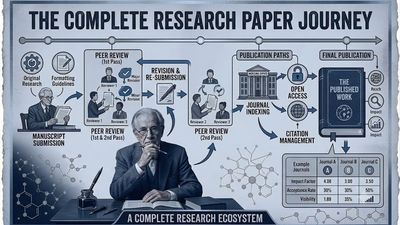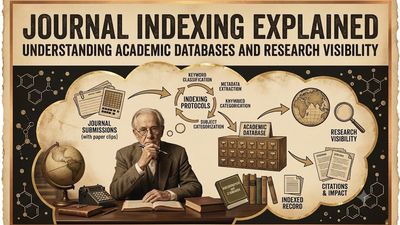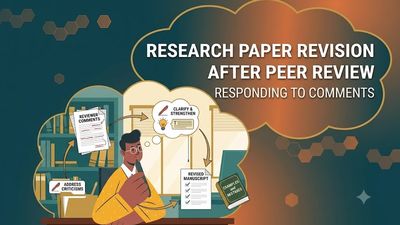

Selecting the right target journal is one of the most critical decisions in an academic career. Even ground-breaking research can face unexpected desk rejections or minimal readership if submitted to a venue with misaligned scope, opaque editorial policies, or slow review cycles.
Whether you are an early-career scholar preparing your first manuscript or an established investigator venturing into multidisciplinary inquiry, this comprehensive guide will help you systematically navigate journal selection.
1. Define Your Publishing Goals First
Before comparing journals, clarify what your paper needs to achieve:
- Target Audience: Are you writing for narrow technical specialists, or does your paper provide interdisciplinary insights that benefit multiple domains?
- Time-to-Publication: Does your grant, graduation, or patent deadline require rapid desk decisions and fast-track peer review?
- Access & Reach: Does your funding mandate immediate, unrestricted Gold Open Access so researchers worldwide can read and cite your work?
2. Aims and Scope: The First Filter
More than 40% of manuscript rejections occur at the desk stage due to out-of-scope submissions. Always read the journal’s official Aims & Scope carefully.
Pro Tip: Look through the journal's last 2–3 published issues. If you do not see papers tackling related methodologies or thematic questions, the journal may not be the ideal home for your work.
Disciplinary vs. Multidisciplinary Journals
- Specialized Journals: Ideal for incremental advancements within a single traditional field.
- Multidisciplinary Journals (like FJMRI): Ideal when your research bridges two or more fields—such as Artificial Intelligence in Healthcare, Environmental Engineering, or Data-Driven Social Sciences—where cross-pollination across domains drives higher real-world impact.
3. Key Evaluation Criteria: A Quick Checklist
Use this comparison matrix to evaluate candidate journals:
| Evaluation Factor | What to Look For | Red Flags to Avoid |
|---|---|---|
| Peer Review Process | Double-blind or single-blind with clearly stated reviewer guidelines | Vague or non-existent peer review standards |
| Review Timelines | Realistic turnarounds (e.g. 2–3 days desk triage, 7–14 days peer review) | Guaranteed acceptance within 24 hours without corrections |
| Indexing & DOIs | Persistent identifiers (Zenodo / Crossref DOIs) and digital preservation | No permanent digital object identifiers or broken article links |
| Copyright & Licensing | Author retains copyright under Creative Commons (e.g., CC BY 4.0) | Complete copyright transfer requiring author fees to share own work |
| Editorial Board | Active, verified researchers with institutional affiliations | Generic editorial names with no verifiable credentials |
| Transparency | Clear APC guidelines, publication policies, and contact information | Hidden fees billed after acceptance |
4. Spotting and Avoiding Predatory Journals
Predatory journals prioritize fee collection over scholarly rigor. Protect your research reputation using the Think. Check. Submit. framework:
- Do you or your colleagues recognize the journal? Have you read articles published by them?
- Can you easily identify and contact the publisher? Is the publisher’s office address and official editorial email clearly displayed?
- Are peer-review guidelines explicit? Legitimate journals outline author instructions, ethics compliance, plagiarism policies, and reviewer duties.
- Are fees clear upfront? Article Processing Charges (APCs) should always be published transparently on the website.
5. Review Turnaround and Editorial Efficiency
Prolonged review cycles (often 6 to 12 months in legacy subscription journals) can stall academic momentum. When evaluating prospective journals, check their stated review metrics:
- Desk Decision Speed: A prompt initial screening (typically 48 hours to 1 week) saves weeks of waiting if a paper needs formatting or redirection.
- Active Editorial Oversight: Look for journals where editorial board members actively coordinate with expert reviewers rather than leaving manuscripts in unassigned queues.
- Revision Windows: Transparent revision timelines ensure both authors and reviewers maintain momentum toward publication.
6. Step-by-Step Submission Action Plan
- Create a Shortlist: Select 3 prospective journals ranked in order of preference (Primary, Secondary, and Backup).
- Format to Author Guidelines: Follow the primary journal’s formatting, referencing style, and structured abstract conventions.
- Craft a Persuasive Cover Letter: Summarize your research question, key findings, and explain explicitly why your study matches the journal's scope and readership.
- Submit to One Journal at a Time: Simultaneous submission to multiple journals violates international academic ethics (COPE guidelines).
Summary
The ideal journal combines scope alignment, scholarly rigor, ethical transparency, and accessible dissemination. By systematically screening journals against these criteria, you protect your research integrity and maximize the global reach of your scientific contributions.
Related Perspectives in Education & Library Sciences