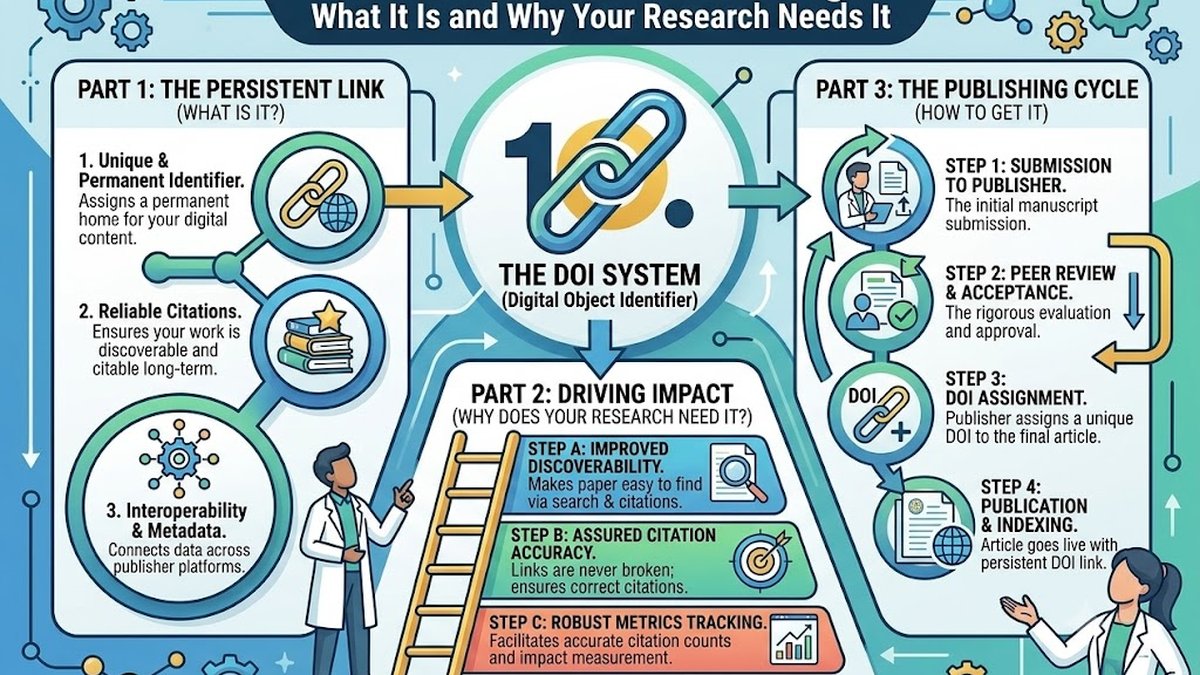
If you have ever read or cited an academic journal article, you have likely encountered a string of characters starting with 10.—such as 10.5281/zenodo.xxxxxx or a Crossref publisher prefix. This string is a Digital Object Identifier (DOI).
In modern scholarly publishing, a DOI is far more than just a hyperlink; it is a permanent digital fingerprint. Understanding how DOIs function is vital for any researcher seeking to secure permanent discoverability and accurate citation metrics for their work.
1. What Exactly Is a DOI?
A Digital Object Identifier (DOI) is a unique alphanumeric string assigned to a specific digital document, dataset, or research artifact. Unlike standard URLs (web links) that break or change when a website is redesigned, migrated, or shut down, a DOI is persistent.
- The Structure: A standard DOI consists of a prefix assigned by a registration agency (like Crossref or DataCite, usually starting with
10.) and a unique suffix designated by the publisher for the specific paper. - The Resolution System: When you click a DOI link, a global resolution server redirects you to the document's current active web address, no matter how many times the journal's underlying website structure changes.
2. Why Does Your Research Paper Need a DOI?
Publishing a manuscript without a persistent identifier significantly limits its professional utility. Here is why a DOI is non-negotiable for serious researchers:
- Eliminates Broken Links (Link Rot): Standard URLs frequently return
404 Not Founderrors over time. DOIs provide a permanent anchor, ensuring researchers worldwide can always trace your study. - Automates Citation Tracking: Indexing databases (like Scopus, Web of Science, and Google Scholar) rely on DOIs to automatically aggregate your citation counts and update your academic profiles.
- Ensures Academic Credibility: Reputable, peer-reviewed journals assign DOIs (such as Crossref or Zenodo DOIs) upon publication. The presence of a DOI signals to committees and granting bodies that the work is professionally published.
- Facilitates Cross-Referencing: Modern reference managers (like Zotero and Mendeley) instantly pull full author lists, publication years, and journal titles simply by pasting a DOI string.
3. How DOIs Interact with Indexing and Repositories
When an editorial board registers a DOI for your article, they submit structured metadata (title, abstract, author names, affiliation details, and reference lists) to registration agencies.
- Global Discoverability: This metadata feeds directly into search crawlers and scholarly graphs, making your paper discoverable across international repositories.
- Plagiarism and Similarity Tracking: Automated screening software cross-references DOI registries to check historical similarities and verify the originality of incoming manuscripts.
- Open Access Archiving: Many open-access journals partner with preservation networks to guarantee that even if a journal ceases operation, the DOI remains active and retrievable via archival nodes.
4. Best Practices for Authors Regarding DOIs
To make the most of persistent identifiers during your publishing journey, keep these rules in mind:
- Always Include DOIs in Reference Lists: When citing literature in your own manuscripts, include the DOI at the end of the bibliographic entry whenever available. It helps peer reviewers verify your sources instantly.
- Use DOIs on Your CV: When listing your publications on academic CVs or grant proposals, hyperlink the DOI rather than a messy website URL.
- Verify Publisher Legitimacy: Ensure the journal you submit to registers official, verifiable DOIs (via agencies like Crossref or DataCite) rather than using unverified internal links.
Summary
The Digital Object Identifier is the backbone of permanent academic record-keeping. By ensuring your research papers are paired with verified DOIs, you protect your work against broken links, streamline global citations, and maximize your long-term academic footprint.
Related Perspectives in Education & Library Sciences