
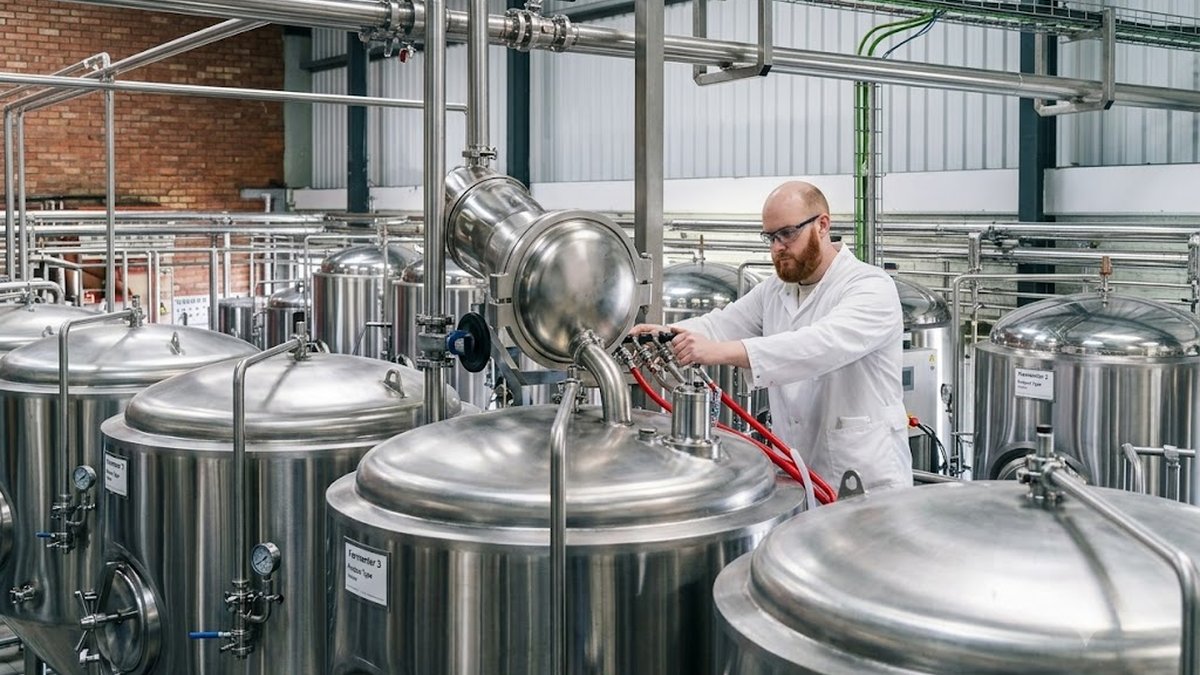
Introduction: A New Architecture for Food Production
Global food systems face interconnected challenges involving population growth, climate change, land availability, resource consumption, supply-chain disruptions, and the need for nutritious foods. Traditional agriculture remains fundamental to feeding the world, but biotechnology is creating additional pathways for producing specific food ingredients.
One of the most closely studied approaches is precision fermentation.
Precision fermentation uses microorganisms as biological production platforms. Through microbial selection, metabolic engineering, and genetic engineering, microorganisms can be developed to produce specific molecules such as proteins, enzymes, fats, vitamins, flavors, and other food ingredients.
Instead of raising an animal to obtain a particular protein, researchers can potentially produce that protein directly through microbial fermentation.
This concept has attracted attention in dairy, egg, alternative protein, functional ingredients, and food biotechnology research.
The central idea is not to replace agriculture entirely. Rather, precision fermentation could decouple the production of selected food molecules from some traditional agricultural inputs, creating an additional production pathway alongside crops, livestock, aquaculture, and conventional fermentation.
What Is Precision Fermentation?
Precision fermentation is a form of biotechnology in which microorganisms are used to manufacture a specific target molecule under controlled conditions.
Microorganisms such as yeast, bacteria, and fungi can serve as microbial "cell factories."
The general workflow can be represented as:
Target molecule → genetic or metabolic design → microbial host → controlled fermentation → molecule recovery → purification → food formulation
Traditional fermentation has been used for thousands of years to produce foods such as bread, yogurt, cheese, vinegar, and fermented beverages.
Precision fermentation differs because the objective is usually to produce a defined compound with a particular composition or function.
For example, an engineered microorganism may be developed to produce a dairy protein that can subsequently be used as an ingredient in a food product.
How Precision Fermentation Works
Precision fermentation combines several scientific disciplines, including microbiology, molecular biology, metabolic engineering, synthetic biology, biochemical engineering, and food science.
1. Identifying the Target Molecule
Researchers first determine what molecule they want to produce.
Potential targets include:
- Dairy proteins
- Egg proteins
- Functional enzymes
- Specialized fats
- Vitamins
- Amino acids
- Flavor molecules
- Pigments
- Other bioactive food ingredients
The target molecule determines the appropriate production strategy.
2. Selecting the Microbial Host
Scientists identify a microorganism capable of producing the target compound efficiently.
Potential production hosts include:
- Yeasts
- Bacteria
- Filamentous fungi
- Other microbial platforms
The choice depends on factors such as productivity, genetic tractability, secretion capability, food-safety considerations, and downstream processing requirements.
3. Strain Engineering
Researchers can introduce or modify genetic pathways so that the microorganism produces the desired compound.
Metabolic engineering can also redirect cellular resources toward the target product.
The objective is not simply to make the microorganism produce a molecule once, but to develop a stable, productive, scalable production strain.
4. Controlled Fermentation
The engineered microorganism is cultivated inside a bioreactor.
Important parameters include:
- Temperature
- pH
- Oxygen transfer
- Agitation
- Nutrient concentration
- Feeding strategy
- Fermentation time
- Microbial density
Precise control of these conditions can improve consistency and productivity.
5. Recovery and Purification
After fermentation, the target molecule must be separated from the fermentation broth.
Depending on the organism and product, researchers may use filtration, centrifugation, membrane separation, chromatography, precipitation, or other downstream-processing technologies.
This stage is particularly important because a technically successful fermentation process may still be economically challenging if product recovery is inefficient.
6. Food Formulation
The purified ingredient can then be incorporated into a food product.
Its function may involve:
- nutrition,
- texture,
- emulsification,
- foaming,
- gel formation,
- flavor,
- stability,
- processing performance.
Precision Fermentation vs Traditional Fermentation
Although both approaches rely on microorganisms, their objectives and technologies can differ substantially.
| Feature | Traditional Fermentation | Precision Fermentation |
|---|---|---|
| Primary objective | Transform food materials | Produce a defined target molecule |
| Microorganisms | Natural or selected cultures | Engineered or optimized production strains |
| Genetic engineering | Generally limited or absent | Commonly used |
| Main outputs | Fermented foods and beverages | Proteins, enzymes, fats, vitamins, flavors, and other ingredients |
| Process control | Controlled but product-dependent | Highly controlled bioprocess |
| Major disciplines | Food microbiology and fermentation | Synthetic biology, metabolic engineering, and bioprocess engineering |
| Example | Yogurt fermentation | Microbial production of dairy proteins |
This distinction helps explain why precision fermentation is increasingly discussed as a food-production platform rather than simply another form of fermentation.
Producing Dairy Proteins Without Cows
Dairy proteins are among the most prominent applications of precision fermentation.
Milk contains proteins such as caseins and whey proteins that contribute to nutritional value and functional properties.
Precision fermentation can use microorganisms to manufacture selected dairy proteins without requiring the conventional process of obtaining those proteins from milk-producing animals.
This approach is different from plant-based dairy alternatives.
Plant-based products generally use ingredients such as:
- soy,
- peas,
- oats,
- almonds,
- other plant sources.
Precision fermentation instead focuses on producing specific proteins through microbial systems.
These proteins can potentially provide functional characteristics important for food formulation, although producing an individual protein does not automatically reproduce every nutritional, sensory, or structural characteristic of conventional milk.
Researchers therefore need to evaluate the final product for:
- nutritional composition,
- digestibility,
- functionality,
- sensory properties,
- allergenicity,
- stability,
- processing behavior.
The Emerging Role of Egg Proteins
Egg proteins represent another potential application.
Egg white proteins contribute important functional properties, including:
- Foaming
- Emulsification
- Gel formation
- Texture
- Protein nutrition
Precision fermentation could allow selected egg proteins to be manufactured without conventional egg production.
This could be particularly relevant for food manufacturers that require specific protein functionality rather than an entire egg.
However, researchers must distinguish between producing a specific egg protein and reproducing the complete biological and nutritional characteristics of an egg.
Beyond Protein: What Else Can Be Produced?
Precision fermentation is broader than alternative protein production.
Microbial platforms can potentially manufacture numerous food ingredients.
Potential applications include:
- Enzymes: Used in baking, brewing, dairy processing, and other food processes.
- Vitamins: Certain microorganisms can be used to produce vitamin-related compounds.
- Flavor molecules: Fermentation can provide alternative production routes for selected flavors and aroma compounds.
- Pigments: Microbial systems can produce certain natural-color compounds.
- Specialized fats: Engineered microorganisms can be investigated for producing specific lipid profiles.
- Functional ingredients: Microbial biotechnology can generate compounds with particular technological properties.
This diversity makes precision fermentation relevant to both food manufacturing and agricultural biotechnology.
Could Precision Fermentation Reduce Agricultural Land Pressure?
One of the most important questions surrounding precision fermentation is whether it can reduce dependence on agricultural land for particular ingredients.
Conventional livestock production requires land for animals as well as feed production and associated agricultural infrastructure.
Precision fermentation changes the production pathway.
Instead of:
Crops → animal feed → livestock → animal product → food ingredient
a microbial production pathway can follow:
Feedstock → microorganism → fermentation → target molecule → food ingredient
This does not eliminate agriculture because fermentation organisms still require feedstocks and nutrients.
However, it could potentially reduce the amount of agricultural land required for producing certain molecules.
The actual environmental benefit depends on multiple factors, including:
- energy source,
- fermentation efficiency,
- feedstock origin,
- water requirements,
- facility design,
- purification efficiency,
- transportation,
- production scale,
- what conventional production the new system replaces.
Therefore, life-cycle assessment is essential before making broad sustainability claims.
Energy and Resource Requirements
Precision fermentation is not resource-free.
Large-scale bioreactors require energy for:
- mixing,
- aeration,
- temperature control,
- sterilization,
- pumping,
- downstream processing.
They also require water, nutrients, equipment, and infrastructure.
This creates an important research question:
Does the environmental advantage of reduced agricultural land use outweigh the energy and industrial inputs required for microbial production?
The answer may vary between products and production locations.
A fermentation facility powered by low-carbon electricity may have a different environmental profile from an equivalent facility dependent on carbon-intensive energy.
Researchers should therefore avoid evaluating precision fermentation using a single sustainability metric.
Precision Fermentation and Global Food Security
Food security depends on more than producing sufficient calories.
The Food and Agriculture Organization emphasizes dimensions including availability, access, utilization, and stability.
Precision fermentation could potentially contribute to food-system resilience by creating additional production pathways for selected nutrients and ingredients.
Potential contributions include:
- Diversifying protein production
- Reducing dependence on specific livestock supply chains
- Producing ingredients in controlled environments
- Manufacturing foods closer to population centers
- Potentially reducing pressure on agricultural land for selected products
- Creating alternative supply chains for specialized ingredients
However, technological availability does not automatically guarantee food security.
Cost, infrastructure, regulatory frameworks, access to technology, consumer acceptance, and distribution systems remain important.
Major Scientific and Industrial Challenges
Despite its potential, precision fermentation faces significant challenges.
Scale-Up
A fermentation process that works in a laboratory vessel may behave differently at industrial scale.
Large bioreactors introduce challenges involving:
- oxygen transfer,
- heat removal,
- mixing,
- contamination control,
- nutrient distribution,
- process stability.
Downstream Processing
Producing a target molecule is only one part of the process.
The product must also be recovered and purified efficiently.
For food applications, downstream processing must satisfy both technical and economic requirements.
Feedstock Selection
Microorganisms require carbon, nitrogen, minerals, and other nutrients.
Researchers therefore need to investigate feedstocks that are:
- affordable,
- scalable,
- consistently available,
- nutritionally suitable for the production organism,
- environmentally appropriate.
Regulatory Approval
Food ingredients produced through genetically engineered microorganisms may require detailed regulatory evaluation.
Authorities may assess:
- safety,
- composition,
- production organisms,
- residual materials,
- allergenicity,
- manufacturing processes,
- intended dietary exposure.
Regulatory requirements differ between jurisdictions.
Consumer Acceptance and Food Transparency
Scientific feasibility is only one component of successful food innovation.
Consumers may have questions about:
- genetic engineering,
- production methods,
- nutritional equivalence,
- safety,
- environmental impacts,
- labeling,
- animal involvement.
Researchers and manufacturers should therefore communicate using precise scientific language rather than broad claims.
For example, "produced using microbial fermentation" communicates a process, while a claim such as "completely sustainable" requires substantial supporting evidence.
Editorial Insight: Researchers should evaluate precision-fermented foods across the entire production system—from microbial strain development and feedstocks to fermentation, purification, packaging, and consumer use—rather than judging sustainability from one stage alone.
Research Opportunities for PhD Scholars
Precision fermentation offers interdisciplinary research opportunities across agriculture, biotechnology, food science, and engineering.
Potential PhD Research Questions
Microbial Biotechnology
- How can microbial strains be optimized for higher protein productivity?
- Which metabolic pathways limit production efficiency?
- How can genetic stability be improved during long-term fermentation?
Bioprocess Engineering
- How can oxygen transfer be optimized in large-scale bioreactors?
- Which feeding strategies maximize productivity?
- How can fermentation energy requirements be reduced?
Food Science
- How do precision-fermented proteins behave during cooking?
- Can microbial proteins reproduce the functional characteristics of conventional proteins?
- How does processing affect digestibility and nutritional quality?
Sustainability Science
- What is the life-cycle carbon footprint of precision-fermented proteins?
- How does land use compare with conventional agricultural production?
- Which renewable feedstocks can improve environmental performance?
Food Safety
- How should residual host-cell material be assessed?
- What analytical methods can verify product purity?
- How should potential allergenicity be evaluated?
Economics and Food Systems
- What production scale is required for cost competitiveness?
- How could precision fermentation affect agricultural supply chains?
- What infrastructure is necessary for regional production?
How Researchers Should Design Precision-Fermentation Studies
A rigorous study should evaluate more than fermentation yield.
Researchers should consider the complete production system.
Recommended Research Framework
1. Define the target product
Clearly specify the protein, fat, enzyme, vitamin, or other ingredient being produced.
2. Characterize the microbial host
Document strain identity, genetic modifications, stability, and production characteristics.
3. Optimize fermentation
Measure productivity, yield, substrate utilization, oxygen transfer, and process stability.
4. Characterize the product
Evaluate purity, structure, nutritional composition, functionality, and stability.
5. Evaluate safety
Investigate relevant toxicological, allergenic, microbiological, and regulatory considerations.
6. Assess environmental performance
Use life-cycle assessment rather than relying on isolated metrics.
7. Evaluate scalability
Demonstrate whether laboratory findings can translate to pilot and industrial scales.
8. Report limitations
Clearly identify assumptions, uncertainties, and areas requiring further investigation.
Precision Fermentation and the Future of Agriculture
Precision fermentation should not be understood as the end of agriculture.
Agricultural systems will continue to provide crops, fruits, vegetables, grains, livestock products, and numerous other foods.
Instead, precision fermentation introduces another layer into the food-production ecosystem.
The future may involve multiple complementary systems:
Conventional agriculture + livestock + aquaculture + plant biotechnology + cellular agriculture + precision fermentation
This diversification could make food production more flexible.
For example, agricultural land may continue to focus on crops and ecosystems where farming provides strong nutritional, economic, or ecological value, while selected high-value ingredients could increasingly be produced through controlled microbial systems.
The extent of this transition will depend on economics, regulation, consumer demand, infrastructure, and technological development.
Actionable Checklist for Researchers
Before developing or publishing a precision-fermentation study, researchers should evaluate:
- Target molecule: Is the intended food ingredient clearly defined?
- Microbial host: Is the production organism properly characterized?
- Genetic design: Are modifications and biological functions documented?
- Fermentation: Are pH, temperature, oxygen, feeding, and productivity reported?
- Downstream processing: Is product recovery and purification described?
- Product quality: Are composition, purity, functionality, and stability evaluated?
- Food safety: Are relevant safety and allergenicity questions addressed?
- Sustainability: Has the entire production lifecycle been considered?
- Scalability: Can laboratory results reasonably translate to larger systems?
- Economics: Are production costs and infrastructure requirements considered?
- Regulation: Does the research account for the applicable regulatory environment?
- Consumer perspective: Are labeling, transparency, and acceptance considered?
Conclusion
Precision fermentation represents an important convergence of agriculture, food science, microbiology, synthetic biology, and industrial biotechnology.
By converting microorganisms into controlled biological production platforms, researchers can investigate new ways to manufacture dairy proteins, egg proteins, specialized fats, enzymes, vitamins, flavors, and other food ingredients.
Its potential contribution to food security lies not in eliminating agriculture, but in diversifying how specific food molecules are produced.
The technology also presents substantial scientific challenges. Large-scale fermentation, energy consumption, feedstock availability, downstream processing, food safety, regulation, economics, and consumer acceptance all require rigorous evaluation.
For PhD scholars and academicians, the field offers a particularly rich research environment because it connects laboratory microbiology with real-world questions of sustainability, nutrition, agricultural land use, industrial biotechnology, and global food systems.
The most valuable research will move beyond demonstrating that a molecule can be produced. It will ask whether the process can be scaled, economically viable, nutritionally appropriate, safe, environmentally responsible, and integrated into resilient food systems.
Researcher's Quick Summary
Precision fermentation → engineered microorganisms → controlled bioreactors → targeted food ingredients → purification → food formulation → safety and sustainability assessment
The future of food production may therefore involve not one replacement technology, but a diversified ecosystem in which farms and fermentation facilities work as complementary components of a more technologically diverse food system.