
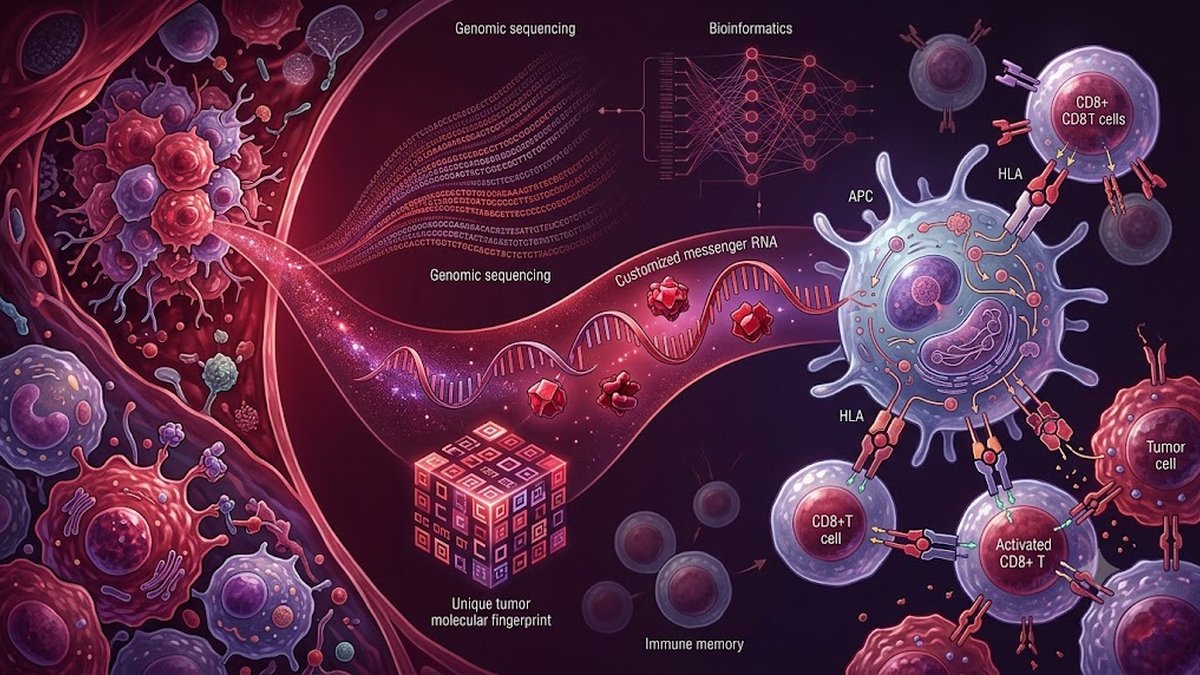
Personalized mRNA Cancer Vaccines: Mechanism, Clinical Evidence, and Translational Horizons
Cancer therapeutics is increasingly moving from broadly defined, histology-based treatment strategies toward precision approaches informed by the molecular characteristics of an individual tumor. Among the most closely studied approaches is the personalized mRNA cancer vaccine—a therapeutic platform designed to stimulate and expand adaptive immune responses against tumor-specific neoantigens.
Unlike prophylactic vaccines, therapeutic cancer vaccines are administered after cancer has developed. Their purpose is not to prevent an infectious disease but to train the immune system to recognize and attack malignant cells. In personalized approaches, tumor-specific mutations are analyzed to identify neoantigens, which can then be encoded into synthetic messenger RNA (mRNA) and delivered to the patient.
Clinical research in melanoma has provided evidence that personalized mRNA vaccination can improve recurrence-related outcomes when combined with immune checkpoint blockade in the adjuvant setting. Early clinical research in pancreatic ductal adenocarcinoma (PDAC) has also demonstrated that individualized mRNA vaccines can generate persistent neoantigen-specific T-cell responses. However, immune responses and clinical efficacy are distinct outcomes, and continued randomized research is required to establish the broader therapeutic role of these platforms.
Personalized mRNA vaccination therefore represents a convergence of cancer genomics, immunology, computational biology, RNA engineering, and lipid nanoparticle technology.
1. Architectural Principles of Personalized mRNA Cancer Vaccines
A personalized cancer vaccine is designed around the molecular characteristics of an individual patient's tumor. The workflow generally combines tumor sequencing, germline comparison, HLA characterization, computational neoantigen prioritization, personalized mRNA design, manufacturing, and immune monitoring.
flowchart TD
    A["Tumor and Matched Normal Tissue"] --> B["Tumor & Germline Sequencing"]
    B --> C["Somatic Mutation Identification"]
    C --> D["RNA Expression Analysis"]
    D --> E["HLA Typing & Neoantigen Prediction"]
    E --> F["Neoantigen Prioritization"]
    F --> G["Personalized Synthetic mRNA Design"]
    G --> H["mRNA Manufacturing & LNP Formulation"]
    H --> I["Clinical Administration"]
    I --> J["Antigen Presentation"]
    J --> K["Tumor-Specific T-Cell Activation"]
1.1 Specimen Acquisition
The process begins with the collection of tumor material together with a matched normal sample. Tumor tissue provides information about somatic alterations, while matched normal DNA helps distinguish tumor-specific variants from inherited germline variation.
1.2 Genomic and Transcriptomic Characterization
Whole-exome sequencing (WES), whole-genome sequencing (WGS), and/or RNA sequencing (RNA-seq) can be used to characterize the tumor.
These analyses may identify:
- Single-nucleotide variants
- Small insertions and deletions
- Frameshift mutations
- Gene fusions
- Abnormal splice events
- Expressed tumor-specific alterations
RNA-seq can additionally help determine whether a candidate mutation is transcriptionally expressed.
1.3 HLA Typing and Neoantigen Prediction
Human leukocyte antigen (HLA) molecules determine which peptides can potentially be presented to T cells. Computational pipelines therefore evaluate candidate mutant peptides against the patient's HLA repertoire.
Neoantigen prioritization can incorporate:
- Predicted HLA binding
- Peptide-MHC stability
- Gene and allele expression
- Antigen-processing characteristics
- Variant allele frequency
- Tumor clonality
- Similarity to self-peptides
- Predicted T-cell receptor recognition
1.4 Personalized mRNA Design
After candidate neoantigens have been prioritized, selected sequences can be incorporated into synthetic mRNA constructs.
The resulting vaccine may encode multiple patient-specific neoantigens in a single formulation.
1.5 Delivery and Antigen Presentation
The mRNA is commonly formulated using a delivery system such as a lipid nanoparticle (LNP). Following administration, cells take up the formulation and translate the mRNA into the encoded antigenic proteins or peptides.
The resulting antigenic material can enter antigen-presentation pathways and stimulate tumor-specific T-cell responses.
The administered mRNA serves as a transient template for protein production and is subsequently degraded through normal cellular RNA-processing pathways. It does not function by integrating into the patient's genomic DNA.
2. Neoantigens vs. Shared Tumor-Associated Antigens
A central consideration in cancer vaccine development is the distinction between tumor-associated antigens (TAAs) and tumor-specific neoantigens.
Tumor-Associated Antigens
TAAs are self-derived proteins that may be:
- Overexpressed by cancer cells
- Restricted to particular tissue lineages
- Expressed during development
- Abnormally expressed in malignant cells
Examples include HER2, MUC1, and NY-ESO-1.
Because these antigens can also occur in normal tissues, immune tolerance may limit the availability of highly reactive T-cell populations. Depending on the antigen and therapeutic strategy, there may also be concerns regarding on-target, off-tumor toxicity.
Tumor-Specific Neoantigens
Neoantigens arise from tumor-specific molecular alterations and can result from:
- Non-synonymous mutations
- Frameshift mutations
- Gene fusions
- Aberrant splicing
- Other tumor-specific genomic events
Because these sequences are generally absent from normal tissues, they can provide highly tumor-specific immune targets.
Key Distinction: Personalized neoantigen vaccination links an individual's tumor sequencing data, HLA genotype, computational target selection, RNA design, manufacturing, and immune monitoring into a patient-specific therapeutic workflow.
3. Immunological Mechanism of Action
The therapeutic rationale of personalized mRNA vaccination depends on antigen expression, processing, presentation, and subsequent activation of adaptive immune cells.
flowchart TD
    A["LNP-mRNA Cellular Uptake"] --> B["Cytoplasmic mRNA Translation"]
    B --> C["Antigen Processing"]
    C --> D["MHC Class I / Class II Presentation"]
    D --> E["CD8+ and CD4+ T-Cell Activation"]
    E --> F["Tumor Recognition"]
    F --> G["Tumor Cell Killing"]
    G --> H["Potential Immune Memory"]
3.1 Cellular Uptake and Translation
Following administration, the delivery system facilitates cellular uptake of the mRNA. Once released into the cytoplasm, host ribosomes translate the mRNA into the encoded antigenic material.
Lipid nanoparticles can also contribute to innate immune stimulation, which may influence antigen-presenting-cell activation and the overall immune response.
3.2 Antigen Processing
The translated antigen can be processed through several intracellular pathways.
MHC Class I Presentation
Endogenously produced proteins can be processed by the proteasome into shorter peptides. Appropriate peptides can be transported through the transporter associated with antigen processing (TAP), loaded onto MHC class I molecules, and transported to the cell surface.
MHC class I presentation is particularly important for activating CD8+ cytotoxic T lymphocytes (CTLs).
MHC Class II Presentation
Antigenic material can also contribute to MHC class II presentation through endosomal and lysosomal pathways.
MHC class II presentation is important for the activation of CD4+ helper T cells, which can support broader immune coordination and the development of effective cellular immune responses.
3.3 T-Cell Priming
Antigen-presenting cells display peptide-MHC complexes to T cells, particularly within lymphoid tissues.
Activated T cells can then undergo:
- Clonal expansion
- Differentiation
- Migration toward tumor tissue
- Effector-function development
- Memory-cell formation
3.4 Tumor Cell Recognition and Killing
CD8+ T cells can recognize tumor-derived peptide-MHC class I complexes and induce target-cell death through mechanisms involving:
- Perforin
- Granzymes
- Death-receptor signaling
CD4+ T cells can contribute through cytokine production and immune-cell coordination.
The resulting response may generate immunological memory capable of recognizing the same neoantigen-bearing tumor cells in the future.
4. Conventional Cancer Vaccines vs. Personalized mRNA Vaccines
| Operational Parameter | Conventional Cancer Vaccines | Personalized mRNA Cancer Vaccines |
|---|---|---|
| Target Antigen Class | Often shared tumor-associated or lineage-associated antigens | Patient-specific tumor-derived neoantigens |
| Formulation Design | Standardized or predefined | Individualized according to tumor characteristics |
| Manufacturing Strategy | Conventional batch manufacturing | Patient-specific manufacturing workflow |
| Prerequisite Diagnostics | Histology and selected biomarkers | Tumor sequencing, RNA analysis, and HLA characterization |
| Target Selection | Predefined antigen selection | Computationally prioritized for each patient |
| Epitope Capacity | Often limited to selected antigen targets | Can encode multiple patient-specific neoantigens |
| Immune Tolerance Considerations | Self-antigen tolerance can limit immune recognition | Neoantigens may be less constrained by pre-existing tolerance |
| Major Development Challenges | Antigen heterogeneity and limited immunogenicity | Manufacturing time, target prediction, tumor heterogeneity, and immune escape |
| Clinical Workflow | More standardized | Highly individualized |
5. Key Clinical Evidence
5.1 Melanoma: Adjuvant Clinical Evidence
Cutaneous melanoma has become an important clinical setting for personalized neoantigen vaccination because many melanomas contain substantial numbers of somatic mutations, creating a relatively large pool of potential tumor-specific targets.
Intismeran Autogene / mRNA-4157 / V940
Intismeran autogene, previously referred to as mRNA-4157/V940, is an individualized mRNA vaccine designed to encode multiple patient-specific neoantigens.
The vaccine has been investigated in combination with the anti-PD-1 antibody pembrolizumab.
KEYNOTE-942 Phase 2b
The randomized phase 2b KEYNOTE-942 study evaluated personalized mRNA-4157 in combination with pembrolizumab versus pembrolizumab alone in patients with resected high-risk melanoma.
The study reported a reduction in the risk of recurrence or death for the combination compared with pembrolizumab alone.
These findings provided clinical evidence supporting further investigation of personalized mRNA vaccination in melanoma.
INTerpath-001 Phase 3
The subsequent phase 3 development program has evaluated the combination in patients with completely resected melanoma.
Important clinical endpoints include:
- Recurrence-free survival (RFS)
- Distant metastasis-free survival (DMFS)
- Safety and tolerability
Clinical Context: The melanoma evidence is primarily situated in the adjuvant setting after surgical resection. Therefore, recurrence-related outcomes should not be interpreted as evidence that personalized mRNA vaccines routinely shrink established bulky metastatic tumors.
5.2 Pancreatic Cancer: Individualized Vaccination in PDAC
Pancreatic ductal adenocarcinoma (PDAC) presents significant challenges for immunotherapy. The disease is associated with a complex tumor microenvironment, dense stromal architecture, immunosuppressive mechanisms, and relatively limited responsiveness to many forms of immune checkpoint blockade.
Autogene Cevumeran
Autogene cevumeran (BNT122/RO7198457) is an individualized mRNA-based vaccine designed to encode patient-specific neoantigens.
An early clinical study conducted at Memorial Sloan Kettering Cancer Center evaluated personalized vaccination in patients with surgically resected PDAC alongside systemic therapy.
Reported Immune Findings
In the reported phase 1 study:
- Patients underwent surgical resection of their tumors.
- Individualized vaccines were generated from tumor-specific neoantigens.
- Patients received vaccine-based treatment in combination with other systemic therapies.
- Among 16 vaccinated patients evaluable for immune response, 8 patients developed detectable neoantigen-specific T-cell responses.
- Vaccine-associated immune responses were detectable for extended periods in some patients.
- The study reported an association between vaccine-induced immune responses and longer recurrence-free survival.
However, the study was an early-phase investigation with a relatively small cohort. Therefore, the findings should be interpreted as evidence of biological and clinical feasibility rather than definitive proof of a survival benefit.
Important Distinction: The presence of a vaccine-induced T-cell response demonstrates immunogenicity. It does not automatically establish that vaccination improves overall survival or provides a durable clinical benefit.
Larger randomized studies are required to determine the magnitude and reproducibility of clinical benefit in PDAC.
6. Mechanistic Synergy: mRNA Vaccines and Checkpoint Blockade
Personalized cancer vaccines and immune checkpoint inhibitors can target different components of the antitumor immune response.
flowchart TD
    V["Personalized mRNA Vaccine"] --> E1["Neoantigen-Specific T-Cell Priming and Expansion"]
    C["Checkpoint Inhibitor<br/>Anti-PD-1 / Anti-PD-L1"] --> E2["Reduction of Checkpoint-Mediated Inhibition"]

    E1 --> T["Increased Tumor-Reactive T-Cell Activity"]
    E2 --> T

    T --> R["Tumor Recognition and Immune-Mediated Killing"]
    R --> M["Potential Immune Memory"]
Vaccine Contribution
The vaccine introduces tumor-specific antigenic information and can expand populations of T cells directed against selected neoantigens.
Potential effects include:
- Increased antigen-specific T-cell frequency
- Greater breadth of the tumor-reactive repertoire
- Expansion of previously rare tumor-specific clones
- Generation of immune memory
Checkpoint-Inhibitor Contribution
Checkpoint inhibitors such as anti-PD-1 and anti-PD-L1 antibodies reduce inhibitory signaling that can restrict T-cell function.
This may allow vaccine-expanded T cells to remain more functionally active in an immunosuppressive tumor environment.
Rationale for Combination Therapy
The conceptual model is:
The vaccine supplies tumor-specific immune targets, while checkpoint blockade can reduce inhibitory signaling that limits T-cell function.
This does not mean that every tumor will respond to the combination. Factors such as antigen presentation, T-cell infiltration, tumor heterogeneity, immune suppression, and HLA integrity can all influence treatment response.
7. Computational Pipeline for Neoantigen Discovery
Personalized vaccine development depends heavily on computational analysis of genomic, transcriptomic, and immunogenetic data.
flowchart TD
    A["Somatic Mutations Detected by WES/WGS"] --> B["Expression Assessment by RNA-seq"]
    B --> C["Patient HLA Genotyping"]
    C --> D["Candidate Neoantigen Generation"]
    D --> E["HLA Binding Prediction"]
    E --> F["Antigen Processing Assessment"]
    F --> G["Expression and Clonality Filtering"]
    G --> H["Immunogenicity Prioritization"]
    H --> I["Final Neoantigen Set"]
    I --> J["Personalized mRNA Design"]
    J --> K["Manufacturing and Formulation"]
7.1 Affinity and HLA-Binding Prediction
Computational tools estimate the likelihood that candidate peptides will bind the patient's HLA molecules.
Binding thresholds can be used for prioritization, but no single affinity cutoff is sufficient to establish that a peptide will generate an effective immune response.
Therefore, predicted HLA binding should be interpreted together with:
- Peptide expression
- HLA expression
- Antigen processing
- Peptide-MHC stability
- Tumor clonality
- Experimental immunogenicity data
7.2 Antigen-Processing Prediction
Candidate peptides must be generated and presented by appropriate cellular pathways.
Computational models can therefore evaluate:
- Proteasomal cleavage
- TAP transport
- Peptide loading
- MHC stability
- Surface presentation
7.3 Tumor Expression
A mutation is generally more useful as a vaccine target when the corresponding altered transcript or protein is expressed.
RNA sequencing can therefore help prioritize expressed variants over mutations that are not detectably transcribed.
7.4 Clonality
Clonal mutations occur across a large proportion of tumor cells, whereas subclonal mutations occur only within particular tumor populations.
Targeting clonal alterations can potentially provide broader tumor coverage, although clonality alone does not guarantee effective antigen presentation or immune recognition.
7.5 Foreignness and Immunogenicity
Candidate neoantigens can also be evaluated according to their similarity to normal human peptides.
The objective is to identify tumor-derived sequences that are sufficiently distinguishable from self to support recognition by tumor-reactive T-cell receptors.
Important: Computational predictions are prioritization tools rather than direct measurements of clinical immunogenicity. Experimental validation remains necessary.
8. Translational and Clinical Complexities
Despite promising clinical and immunological findings, personalized mRNA vaccination presents several important translational challenges.
8.1 Manufacturing Turnaround Time
Personalized manufacturing involves multiple sequential steps:
- Tumor acquisition
- Sequencing
- Mutation identification
- HLA characterization
- Neoantigen prediction
- Candidate prioritization
- mRNA design
- Manufacturing
- Quality control
- Clinical administration
Historically reported development timelines can extend across several weeks. For rapidly progressing disease, the manufacturing interval may become clinically important.
8.2 HLA Class II Prediction
MHC class I prediction has benefited from extensive computational development, while class II prediction remains challenging because of the different structural and peptide-binding characteristics of MHC class II molecules.
This is particularly relevant because CD4+ T-cell responses can contribute substantially to antitumor immunity.
8.3 Tumor Immune Escape
Tumors can evolve mechanisms that reduce recognition by vaccine-induced T cells.
Potential mechanisms include:
- HLA loss or downregulation
- β2-microglobulin alterations
- Antigen-processing defects
- TAP pathway abnormalities
- Loss of targeted neoantigens
- Expansion of antigen-negative tumor subclones
- Immunosuppressive changes in the tumor microenvironment
8.4 Tumor Heterogeneity
A tumor is not necessarily genetically uniform. Different regions or subclones may carry different mutations.
Consequently, a vaccine directed against a limited set of neoantigens may not recognize every malignant cell.
8.5 Manufacturing and Economic Complexity
Individualized products require patient-specific:
- Manufacturing workflows
- Quality-control procedures
- Documentation
- Supply-chain coordination
- Cold-chain management
- Release testing
These requirements can create logistical and economic challenges compared with standardized pharmaceutical products.
8.6 Clinical Endpoint Interpretation
One of the most important methodological considerations is distinguishing immunological activity from clinical efficacy.
For example:
| Measure | What It Indicates |
|---|---|
| IFN-γ ELISpot response | Antigen-specific immune activity |
| Tetramer-positive T cells | Frequency of antigen-specific T cells |
| TCR clonotype expansion | Expansion of specific T-cell populations |
| RFS | Time without recurrence |
| DMFS | Time without distant metastasis |
| PFS | Time without disease progression or death |
| OS | Time until death from any cause |
An increase in vaccine-specific T cells does not necessarily demonstrate an improvement in survival.
9. Clinical Research and Manuscript Checklist
Before drafting or reviewing a manuscript on personalized mRNA cancer vaccines, verify the following:
Clinical Setting
- Clearly distinguish adjuvant treatment after surgical resection from treatment of advanced or metastatic disease.
- Specify disease stage and treatment setting.
- Describe whether patients had measurable disease at treatment initiation.
Clinical Endpoints
- Distinguish immunological endpoints from formal oncology endpoints.
- Clearly define RFS, DMFS, PFS, and OS where applicable.
- Report prespecified primary and secondary endpoints.
- Avoid presenting surrogate immune responses as equivalent to survival outcomes.
Molecular Characterization
- Report tumor mutational burden (TMB) when relevant.
- Report MSI or mismatch-repair status when relevant.
- Document patient HLA characteristics.
- Describe the genomic sequencing platform.
- Report relevant sequencing coverage metrics.
- Explain how somatic mutations were distinguished from germline variants.
Neoantigen Selection
- Describe the bioinformatic pipeline used for neoantigen prediction.
- Report relevant software and version information.
- Specify peptide-selection criteria.
- Describe HLA-binding prediction methodology.
- Report expression-based filtering criteria.
- Describe clonality assessment.
- Explain whether selected targets were clonal or subclonal.
- Describe experimental validation where available.
Vaccine Design and Manufacturing
- Report the number of encoded neoantigens.
- Describe the mRNA construct architecture where appropriate.
- Identify the delivery platform.
- Describe the lipid nanoparticle formulation where relevant.
- Report the administration route and dosing schedule.
- Document manufacturing and quality-control procedures.
- Report the interval between tumor sampling and vaccine administration.
Combination Therapy
- Clearly identify concomitant checkpoint inhibitors.
- Identify chemotherapy or other systemic treatments.
- Distinguish vaccine-associated effects from background treatment.
- Include an appropriate control group where applicable.
Immune Monitoring
- Define the assays used to measure vaccine-induced immunity.
- Report sampling time points.
- Describe antigen-specific T-cell detection methods.
- Report CD4+ and CD8+ responses where evaluated.
- Assess durability of immune responses where possible.
- Avoid equating immune response with clinical efficacy without supporting evidence.
Safety
- Report treatment-emergent adverse events.
- Report serious adverse events.
- Describe immune-related adverse events where applicable.
- Distinguish vaccine-related toxicity from toxicity caused by combination therapies.
- Use standardized toxicity grading systems.
Statistical Reporting
- Report sample size and analysis population.
- Describe statistical methods.
- Report effect estimates and confidence intervals.
- Provide appropriate measures of uncertainty.
- Explain handling of missing data.
- Clearly distinguish exploratory analyses from prespecified analyses.
10. Translational Outlook
Personalized mRNA cancer vaccines represent a convergence of precision oncology, tumor immunology, genomics, computational biology, RNA engineering, and nanomedicine.
The fundamental concept is to identify molecular features that distinguish malignant cells from normal cells and convert those features into individualized immune targets.
The complete workflow can be summarized as:
flowchart LR
    A["Patient Tumor"] --> B["Genomic & Transcriptomic Profiling"]
    B --> C["Neoantigen Discovery"]
    C --> D["HLA & Immunogenicity Prediction"]
    D --> E["Personalized mRNA Design"]
    E --> F["Manufacturing & LNP Formulation"]
    F --> G["Vaccination"]
    G --> H["T-Cell Expansion"]
    H --> I["Tumor Recognition"]
    I --> J["Clinical Outcome Assessment"]
Future research is likely to focus on improving:
- Sequencing speed and accuracy
- Neoantigen prediction
- HLA class I and class II modeling
- Prediction of antigen processing and presentation
- Personalized manufacturing speed
- RNA stability and delivery
- Lipid nanoparticle engineering
- Combination strategies with checkpoint inhibitors
- Integration with circulating tumor DNA monitoring
- Identification of biomarkers associated with clinical benefit
- Strategies to address tumor heterogeneity
- Approaches to prevent or overcome immune escape
An important emerging concept is the integration of longitudinal tumor monitoring with vaccine design. As tumors evolve, circulating tumor DNA, repeat tissue sampling, and immune profiling may eventually provide additional information about whether targeted neoantigens remain present and immunologically accessible.
The long-term objective is not simply to demonstrate that a personalized vaccine can generate an immune response, but to establish reproducible links between neoantigen selection, T-cell activity, tumor control, recurrence prevention, and survival.
11. Conclusion
Personalized mRNA cancer vaccines represent an important development in individualized cancer immunotherapy. By combining tumor sequencing, HLA characterization, computational neoantigen prediction, synthetic RNA engineering, and targeted immune stimulation, these platforms seek to convert patient-specific tumor mutations into therapeutic targets.
Clinical studies in melanoma have provided evidence of improved recurrence-related outcomes for personalized mRNA vaccination when combined with pembrolizumab in the studied adjuvant setting. Early investigations in pancreatic cancer have demonstrated that individualized mRNA vaccination can generate persistent neoantigen-specific T-cell responses.
At the same time, several important questions remain. These include the speed and cost of personalized manufacturing, the accuracy of neoantigen prediction, tumor heterogeneity, antigen loss, HLA alterations, immune suppression, treatment sequencing, and the relationship between immunological responses and long-term clinical outcomes.
The field is therefore moving beyond the question of whether personalized mRNA vaccines can generate tumor-specific T cells. The central translational challenge is determining which patients, which tumor types, which neoantigens, and which treatment combinations can convert those immune responses into durable clinical benefit.
As sequencing technologies, computational prediction, RNA engineering, and personalized manufacturing continue to mature, personalized mRNA vaccination may become an increasingly important component of precision immuno-oncology. Its ultimate clinical role will depend on evidence from adequately powered clinical trials demonstrating reproducible improvements in meaningful patient outcomes.